
Tongue Tie & Myofunctional Therapy
Learn how restricted tongue movement may affect oral function, swallowing, breathing, and tongue posture, and how myofunctional therapy can support care before and after a frenectomy when appropriate.
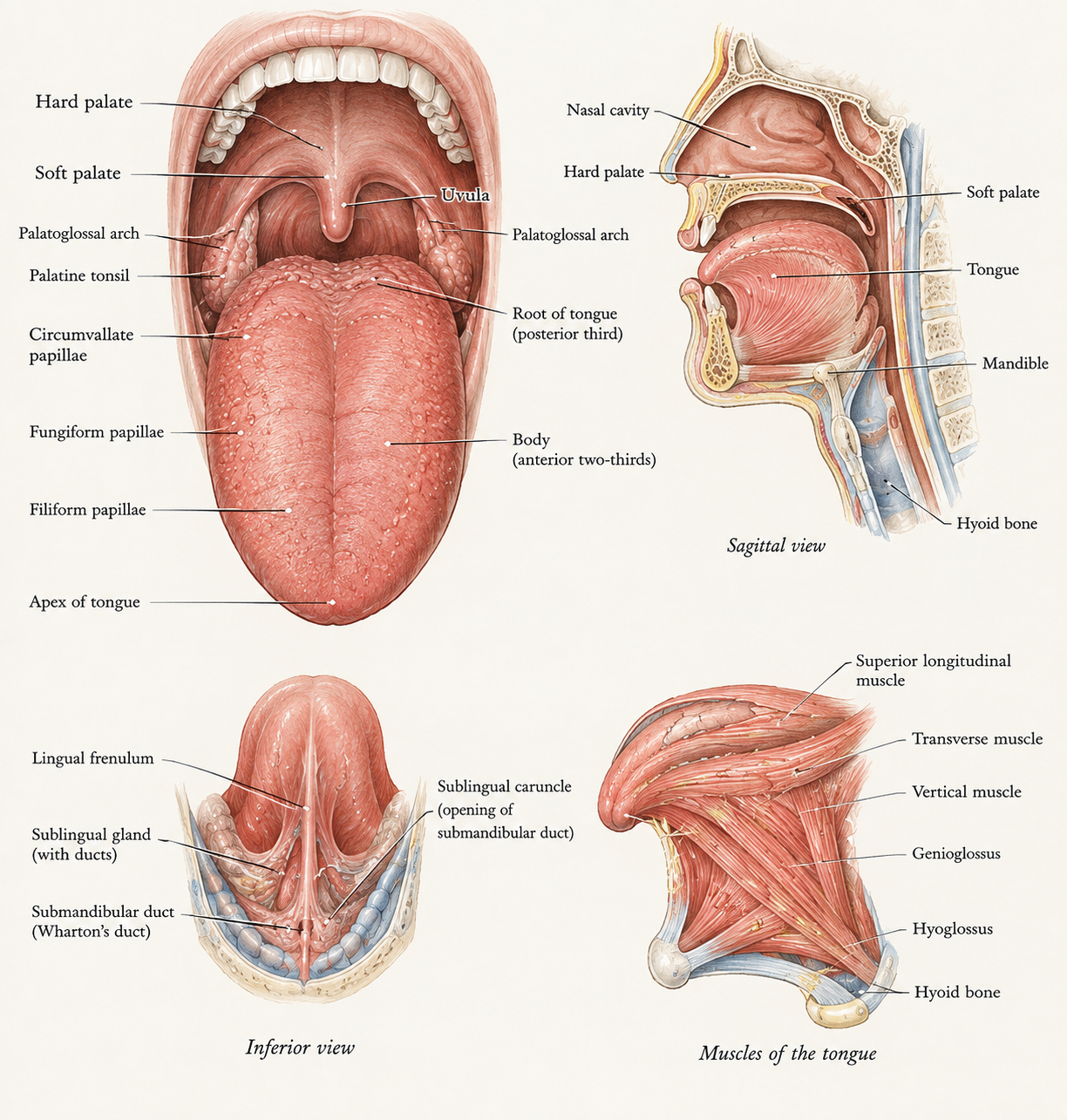
Tongue-tie, also known as ankyloglossia, is a condition present at birth that restricts the tongue's range of motion. When the band of tissue connecting the bottom of the tongue to the floor of the mouth is unusually short, thick, or tight, it can affect the way the tongue functions in everyday activities such as eating, speaking, swallowing, and breathing.
How Tongue Tie May Affect Oral Function
The tongue plays a central role in many essential functions throughout life. When its movement is restricted, it can contribute to patterns involving swallowing, breathing, speech, and resting oral posture. Some individuals with tongue-tie may experience difficulty with certain sounds, challenges with breastfeeding as infants, or habits such as mouth breathing.
Because the tongue also helps shape the palate and dental arch during growth, restricted tongue posture may influence dental development, crowding, or the formation of a narrow palate over time.
The Role of Myofunctional Therapy Before and After a Frenectomy
A frenectomy is a procedure that releases the restricted tissue under the tongue. While the procedure itself addresses the physical restriction, the surrounding muscles and functional patterns often need support to adapt to the new range of motion.
Myofunctional therapy exercises are commonly recommended before a frenectomy to help strengthen the tongue and orofacial muscles, preparing them for improved function. After the procedure, exercises continue to support healing, reduce the risk of tissue reattachment, and help retrain the tongue to rest and function in healthier patterns.
When Therapy May Be Recommended
Myofunctional therapy may be recommended when tongue-tie is contributing to dysfunctional patterns such as low tongue posture, mouth breathing, tongue thrust, or difficulty swallowing. A comprehensive evaluation can help determine whether therapy is appropriate and how many sessions may be needed.
Therapy is individualized based on the patient's age, concerns, and goals. For children, exercises are often adapted to be age-appropriate and engaging.
Have Questions About This Topic?
Carrie offers complimentary phone consultations to help you determine whether myofunctional therapy may be appropriate for you or your child.
Contact UsRelated Resources

Sleep Apnea, Breathing & Myofunctional Therapy
Explore the relationship between oral posture, breathing patterns, airway function, sleep-related concerns, and the role myofunctional therapy may have as part of coordinated care.
Read More
TMD, Jaw Tension & Myofunctional Therapy
Learn how jaw tension, facial muscle patterns, oral posture, and other functional habits may contribute to discomfort around the temporomandibular joint.
Read More
Mouth Breathing & Myofunctional Therapy
Learn why nasal breathing and proper resting oral posture matter and how persistent mouth-breathing patterns may affect sleep, oral health, and everyday function.
Read More